
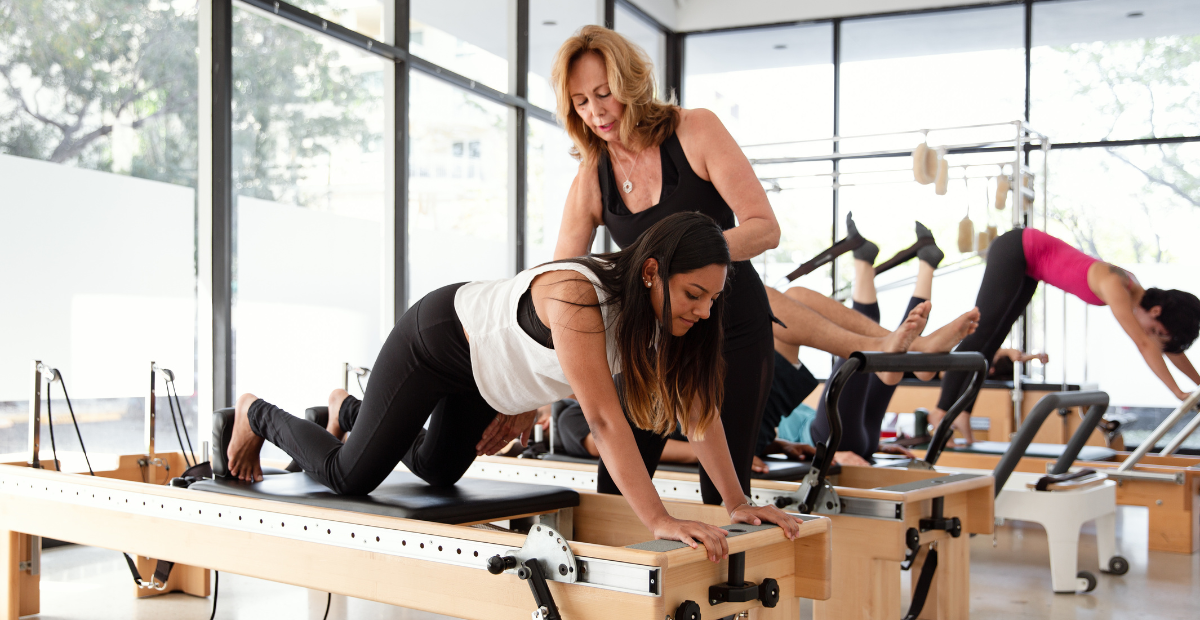
Cueing is a fundamental aspect of Pilates instruction. Whether you’re teaching a group class or providing one-on-one sessions, how you direct your clients’ attention can greatly impact their performance, safety, and overall experience. One of the most important tools in your cueing toolkit is knowing when to use internal focus cues (directing attention to the body) versus external focus cues (directing attention to the environment or a specific movement outcome). Understanding when and how to switch between these types of cues can elevate the quality of your sessions and enhance client results.
What “Focus Cues” Mean
In Pilates, focus cues are used to guide clients’ attention either to their own body (internal) or to the desired outcome or movement (external). The type of cue you use influences the way a person moves and learns new skills. Research in motor learning and cueing has shown that both internal and external cues have distinct benefits depending on the context and goals of the exercise.
For example, internal cues focus on how the body should feel or what it should be doing, such as “engage your core” or “pull your shoulder blades down.” On the other hand, external cues direct attention to the result or the end goal, such as “reach your hands to the ceiling” or “push the floor away.”
When Internal Cues Help (Setup, Safety, Novices)
Internal focus cues are essential in certain contexts, particularly when setting up an exercise or focusing on the client’s safety. For beginners, internal cues help them establish the foundational awareness of their body and align their movements properly. Cues such as “pull your navel towards your spine” or “press your heels down” help clients activate key muscle groups and understand proper posture before moving on to more complex exercises.
For example, when teaching a mat Pilates class to novices, focusing on internal cues like “lengthen your spine” or “find neutral pelvis” ensures that students understand their body mechanics, which lays the groundwork for more advanced movements.
When External Cues Win

External focus cues, on the other hand, can be more effective when the goal is performance, coordination, or flow. These cues direct attention away from the body and towards the task at hand, improving fluidity, motor learning, and overall movement efficiency. Research has shown that external cues often lead to better movement outcomes, such as increased power and coordination, by allowing the body to perform with less conscious interference.
For example, when teaching more advanced Pilates exercises, you might say, “Reach your arms toward the wall” instead of focusing on the body’s movements. This can help the client engage their muscles more efficiently and create smoother, more controlled movements.
How to Switch Cues Mid-Exercise
Switching cues mid-exercise is an important skill to master, especially as your clients advance in their Pilates practice. For example, you might begin with an internal cue to ensure a client is correctly aligned and activated, then switch to an external cue to focus on improving performance or fluidity as they progress through the movement.
Let’s say you’re teaching a Reformer exercise like the footwork series. You may start by cueing, “Press the heels into the footbar” (internal focus) to ensure correct foot positioning and muscle engagement. Once the client becomes more confident in their positioning, you can switch to an external cue like “Push the footbar away” to encourage better movement flow and coordination.
Cue Examples

Here are a few cueing examples to illustrate how to use both internal and external cues for various exercises:
Mat Exercise (Roll-Up):
- Internal Cue: “Tuck your chin and feel each vertebrae stack as you roll up.”
- External Cue: “Imagine peeling your spine off the mat one bone at a time.”
Reformer Exercise (Footwork):
- Internal Cue: “Engage your inner thighs and press through your heels.”
- External Cue: “Push the footbar away with the power of your legs.”
Switching between these two types of cues helps maintain the client’s focus while also keeping them engaged in the movement process.
FAQs
What is the difference between internal and external focus cues?
Internal cues focus on body awareness and muscle activation, while external cues direct attention to movement outcomes or the environment, leading to more fluid and coordinated movements.
When should I use internal cues in Pilates?
Internal cues are particularly useful for beginners in exercises that require alignment, safety, and muscle engagement. They help clients understand their body mechanics before progressing to more complex movements.
When should I use external cues in Pilates?
External cues are effective when aiming for improved performance, coordination, or fluidity. They help clients achieve more efficient and powerful movements by reducing conscious interference.
How do I switch between internal and external cues mid-exercise?
Start with internal cues to ensure safety and correct alignment, then transition to external cues to promote better movement flow and performance. This approach helps your clients become more mindful and efficient in their movements.
Want Cueing Frameworks Taught and Assessed?
If you want to dive deeper into cueing frameworks and receive expert feedback on your teaching, the Polestar Pilates Diploma offers comprehensive training that will enhance your cueing skills and overall teaching practice.
Book a short consult to learn more about our programs and start your journey towards becoming a more confident, skilled Pilates instructor.